
Name
Treasure Hunt: Pirate Adventure
Core Skill
- Breath control: Students must exhale underwater and inhale at the surface.
- Diving: Practicing controlled dives to reach submerged objects.
- Streamlining: Maintaining a straight body line while diving and swimming.
- Kicking: Using legs to propel themselves both underwater and on the surface.
- Arm strokes: Utilizing arms for propulsion in various swimming techniques.
- Buoyancy: Adjusting ability to sink or float as needed.
- Coordination: Coordinating breathing, diving, swimming, and object retrieval skills.
- Endurance: Swimming back and forth multiple times between the base and the treasure area.
- Teamwork: Cooperating with teammates while following established rules.
Who
This game is excellent for students aged 2-5 years, but it can be adapted for various ages and skill levels. It works well with small or large groups, provided you balance the teams in terms of number and skill.
What
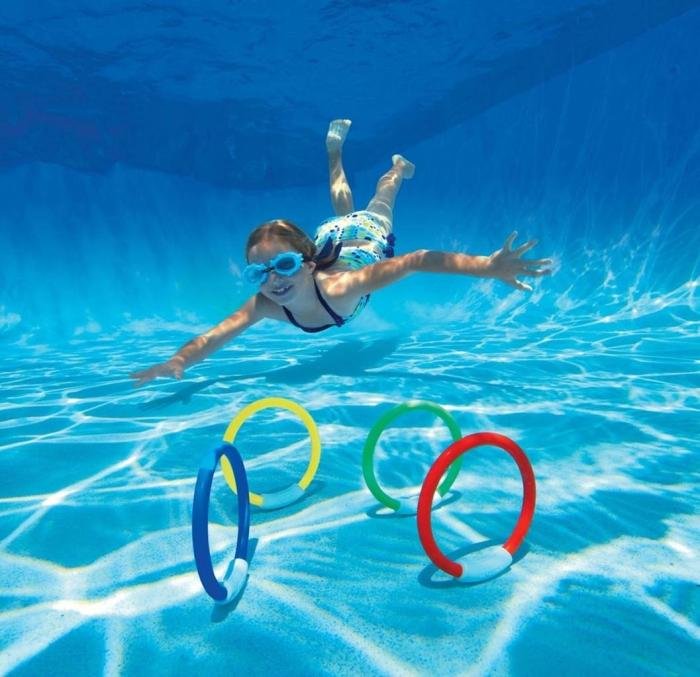
Students are pirates or treasure hunters, and the instructor acts as the Captain. The activity takes place in a zero-depth pool (simulating a beach). The goal is to find scattered "treasure" (toys, rings, coins) while following specific rules and returning the items to the boat/harbor.
How
- Get a kickboard to serve as the "boat."
- The instructor (Captain) steers the boat, while the children go around it.
- The instructor performs an alligator walk while pushing the "boat."
- Children follow suit, performing alligator walks behind or around the instructor and "boat" while hunting for treasure.
- When the Captain reaches a certain point, throw toys or rings into the water for the pirates/children/hunters to find.
- Enforce rules: Children can only retrieve treasure if they perform an underwater dive, a front float, or blow bubbles.
- Students must bring one piece of treasure back to the boat at a time and stack it up.
- The return journey should involve an alligator walk with bubbles to simulate moving the treasure-laden boat faster.
- Optional: Simulate a storm where the treasure is lost, requiring a new activity (e.g., back floats or underwater dives) to find it again.
- Finally, pull into the "harbor" (where class began) and give rewards for the collected treasure.
Difficulties Instructors Might Face
The success of this game relies heavily on the instructor's willingness to suspend disbelief and fully engage in role-playing with the children. Safety is paramount; always adjust the depth and size of the treasure area according to the students' abilities. It is crucial to manage the energy level, ensuring that the fun doesn't compromise proper technique or safety protocols.