
Aquatic professionals have a love-hate relationship with lap swimmers. They show up at 5 a.m., thirty minutes before the pool opens. When you're covering the morning shift for a guard who called in the night before at 11 p.m., you're not happy to see their expectant faces and scowls as you rub the sleep from your eyes at that ungodly hour.
I'm sure you've seen lap swimmers of varying ability. There are the converted adult swimmers training for a triathlon, the dedicated lifelong swimmers who get their laps in every day or every week, and the newbies starting out, trying to reap the low-impact aerobic benefits of swimming.
But how many of them do a decent streamline? How many give lip service to it? Does it offend you—like it irritates me—when you see them push off with lazy, bow-elbowed arms above their head, making a mockery of an effective streamline?
Can you picture all the signs of a poor streamline?
- Bent elbows
- Hands apart
- Head up
- On the surface
- Excessive splashing
It isn't always the lap swimmer's fault. They might not know what a streamline is! They may think that doing a streamline in a pool doesn't directly translate into a better swim in open water for their triathlon. But making streamline a habit in pool training will directly affect a lap swimmer's ability to swim freestyle better.
What Is a Streamline?
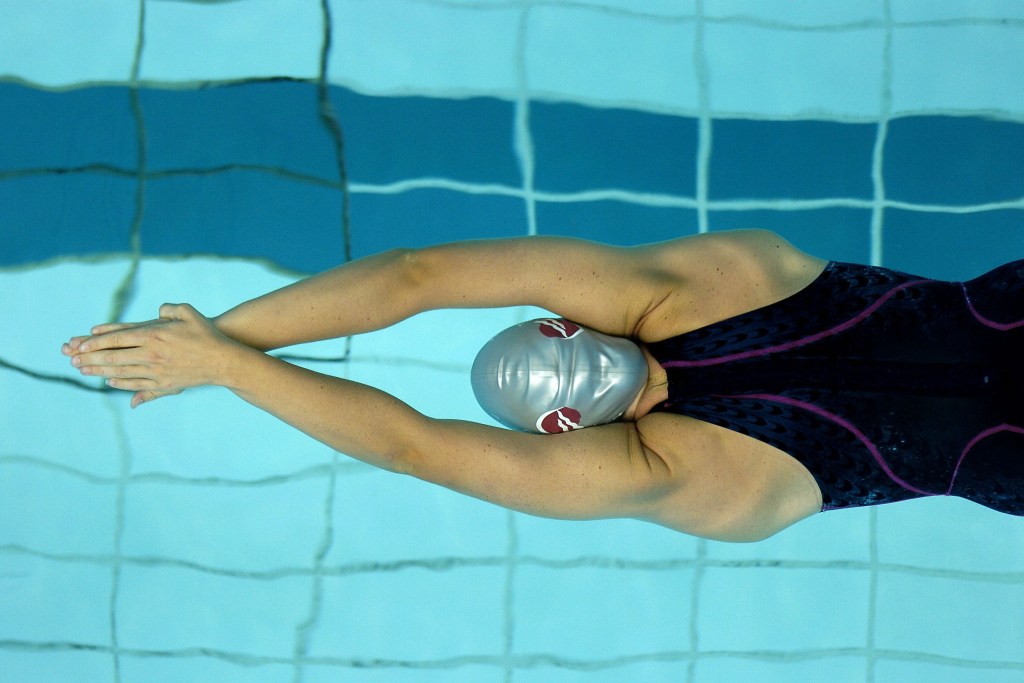
What are the three things for streamline we're working on?
Standing on deck, demonstrate and say it.
Establishing a Habit
Swimming is an art of discipline. Think about streamline: multiple facets go into doing it well—locked thumb, squeezed elbows and ears, face aiming down, body straight and long. Consider freestyle: there are a thousand little details involved in doing it well, and it can take a long time to master.
But you can improve your freestyle, your breathing, your stroke, your speed, and your overall ability by establishing a simple streamline habit. Swimming is an expression of intent through physical movement. I like to tell my young 6–10 year old swimmers that swimming is like a choreography, a dance—a series of dance moves they should go through in the water.
When you establish a habit of streamlining off every wall in a pool, you're dedicating yourself to this specific dance choreography. Making the choice to streamline makes it easier to start making other choices while you swim that you may not initially want to do. Create a habit to streamline, and you'll be receptive to aiming your face down during freestyle. You'll be more likely to swim with your nose dragging on the boring black line. If you're willing to create a habit of streamline, you'll be more likely to improve the rest of your swimming.
Extending Your Strokes: Maximizing Every Arm Movement
Steve Hoffler is a genius when it comes to teaching swimming. I love the way he does things, and much of our work here is built upon his brilliant instruction and drills. Position 11 is transformative. Your lap swimmers may know about long reaching arms that are almost "catch-up" from the book series "Effortless Swimming."
My office is above the lap swimming pool, and I have a window that looks out over it. I'll often watch lap swimmers pushing off the wall in a terrible mockery of streamline and wince as they start pounding the water with wiggling bodies, twisting limbs, and splashing feet. Their effort is inspiring, though their technique could use some work. (We laminated our SwimSheets and Visual Guides from theDigital Lesson Plansand put them on the pool deck so anyone can use them for reference.)
I want them to improve. I want them to get better, and I know that if they begin streamlining, their freestyle swim will also improve. Streamline is putting your arms directly above your shoulders and then tapering in above your head. If you've established it as a habit, then you're already familiar with that long arm, near-locked elbow, and extended reach.
You know how to stretch your arms above your shoulders if you streamline often. Stretch your arms then into position 11 with every stroke, and take advantage of your long arms, your habit, and what you already know how to do. Express your discipline earned through streamlining off every wall to reach into position 11 as you swim.
Check out this video. If you've established a strong streamline, doing this while you swim should not be overwhelmingly difficult.
You can see from the video that the long reaches—the long, straight arm extended forward in front of the shoulder—lead to a better stroke.
Control your head
One of the key points to streamline is “looking down” with the whole face.
Raising your head can dramatically slow your swimming. It creates a banana shape to your body and forces you to push more water in order to move forward.
I know. I know. Looking at the bottom of the pool is boring. Looking down with your whole head is mind-numbingly frustrating.
When your head is aimed down, when you push the water with the crown of your head like you learn to in streamline then the body remains balanced on the surface minimizing drag and it becomes easier to swim.
Check out this video:
Yes, this video is full of ways to get better at aiming your head down when you swim but if you already are doing it when you streamline, you have the muscle memory in place to do it while you swim!
If your lap swimmers start streamlining consistently they’ll have an advantage to swimming with their head down. Remember one of the three key points to streamline; look down. Continue that mantra while you’re swimming freestyle, resting on the habit, resting on the discipline of streamline to keep that face aimed down.
Streamline improves freestyle performance
Watch your lap swimmers. What one key metric can you look at and make an educated guess if that person is going to have a strong effective stroke?
I’ll bet you know this answer. If that person streamlines I can almost guarantee that they’ll kick (I know, ridiculous to point out but many beginning lap swimmers don’t use their feet), they’ll likely keep their head down, they’ll probably have long reaching strokes, and they’ll swim with effortless speed.
Encourage your lap swimmers to streamline. Give them the printed and laminated premiumlesson plansfound here:
Specifically look at the “Streamline” sheet and the “Crawls and Breathing” segment from the SwimSheets.
What do you think? Do you encourage streamline for your lap swimmers? Do you promote it in your swim lessons to start the discipline early?
Comment below or connect on social media!
Discussion0 comments