
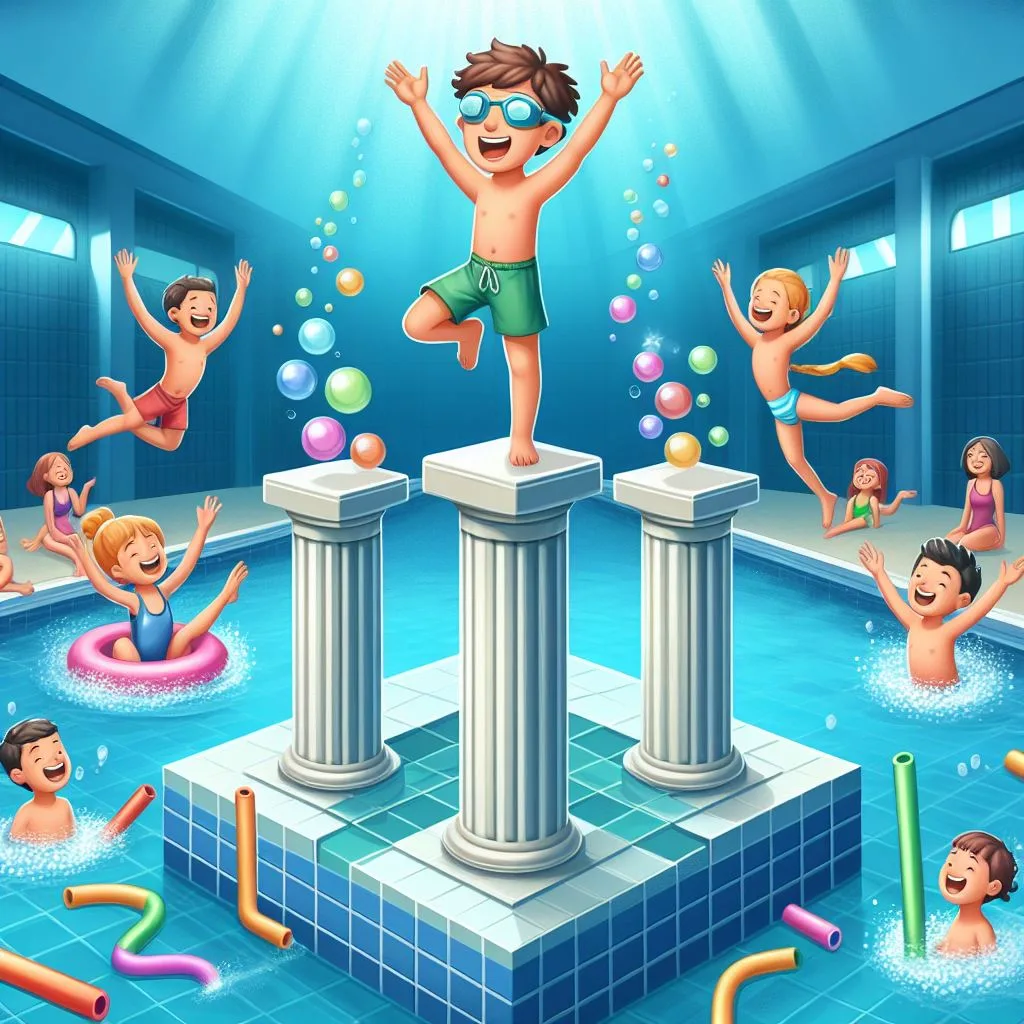
Teaching is a complex and rewarding profession that requires a combination of skills, knowledge, and passion. In this guide, I'll share the three pillars of effective teaching that I've learned from my experience as a swimming instructor and coach. These pillars are: follow the formula "activity, activity, challenge," provide a framework of consistency, and provide targeted relevant feedback. By applying these principles to your swimming lessons, you'll create a positive and productive learning environment for your students and help them achieve their goals.
Follow the Formula: Activity, Activity, Challenge
The first pillar is to design your lessons using the formula "activity, activity, challenge." This means engaging your students in two activities that are fun, easy, and familiar, followed by one activity that is more challenging, new, and unfamiliar. This formula builds confidence, motivation, and curiosity while introducing new skills gradually and effectively.
For example, start your lesson with a warm-up activity that involves swimming with different strokes or equipment, such asfins, paddles, or noodles. This helps students warm up their muscles, practice coordination, and have fun. Then, move on to a drill activity that focuses on a specific skill or technique, such asstreamline, balance, or rotation. This improves efficiency, accuracy, and consistency. Finally, finish with a challenge activity that tests students' ability to apply what they've learned in a different or more difficult situation, such asswimming longer distances, faster speeds, or with obstacles. This develops endurance, agility, and adaptability.
By following this formula, you'll create a variety of activities that suit different levels, abilities, and interests, keeping students engaged and challenged throughout the lesson.
Provide a Framework of Consistency
The second pillar is to structure your lessons in a way that creates a sense of order, predictability, and routine for your students. This reduces anxiety, confusion, and frustration while fostering discipline, focus, and cooperation.
Create a framework of consistency by using the same format, language, and expectations for every lesson, regardless of who is teaching or what level the students are at. For example, use this format for every lesson:
You can also use strategies like therotation method,lanes,short distance circle swimming, and other tactics to establish habits and patterns in your students' behavior and movement. For instance, use the rotation method to ensure every student gets a chance to swim in different positions and receive feedback from different instructors, or use lanes to group students by ability and pace.
By providing a framework of consistency, you'll create a safe and comfortable learning environment that helps students follow the structure and flow of the lesson.
Provide Targeted Relevant Feedback
The third pillar is to give your students specific, timely, and constructive information about their performance and progress. This improves their skills, knowledge, and confidence while encouraging them to keep trying and learning.
Provide targeted relevant feedback by being knowledgeable about the subject matter and best practices, observing your students carefully, and distilling your feedback to the 20% of fixes that will generate 80% of the results. For example, use the<a href="https://en.wikipedia.org/wiki/Pareto_principle">Pareto principle</a>to identify the most impactful aspects of your students' swimming form and technique, such asbody position, breathing, or kick, and focus your feedback on those areas rather than minor or irrelevant details.
Use different methods and tools to deliver your feedback, such asverbal, visual, or tactile cues,demonstrations, corrections, or reinforcements, orcharts, videos, or apps. For example:
- Use verbal cues to remind students to keep their head down.
- Use visual cues to show them how to glide smoothly.
- Use tactile cues to adjust their arm position.
- Use demonstrations to model the correct way of doing a skill.
- Use corrections to fix a mistake.
- Use reinforcements to praise a good effort.
- Use charts to track progress, videos to review performance, or apps to analyze data.
By providing targeted relevant feedback, you'll create a supportive and informative learning environment that helps students achieve their goals and potential.
Conclusion
These are the three pillars of effective teaching that I've learned from my experience as a swimming instructor and coach. By following the formula "activity, activity, challenge," providing a framework of consistency, and providing targeted relevant feedback, you'll create a positive and productive learning environment for your students. They'll improve their swimming skills and enjoy their lessons more. I hope you found this guide useful and informative. Share your thoughts and experiences in the comments below. Thank you for reading and happy teaching!
Discussion0 comments