
Coaching a developmental swim team is a rewarding and exciting experience. I totally enjoyed guiding swimmers from total beginners into competitive swim team participants.
You can find an exhaustive guide on how to structure your Developmental Swim Program in the newDevelopmental Swim Team Coaching online course! It includes everything from planning out your group structure to practice templates, and guidance on the merging of meditation, deliberate practice, and how coaches can be the best they can.
Circle Swimming
What is Circle Swimming?
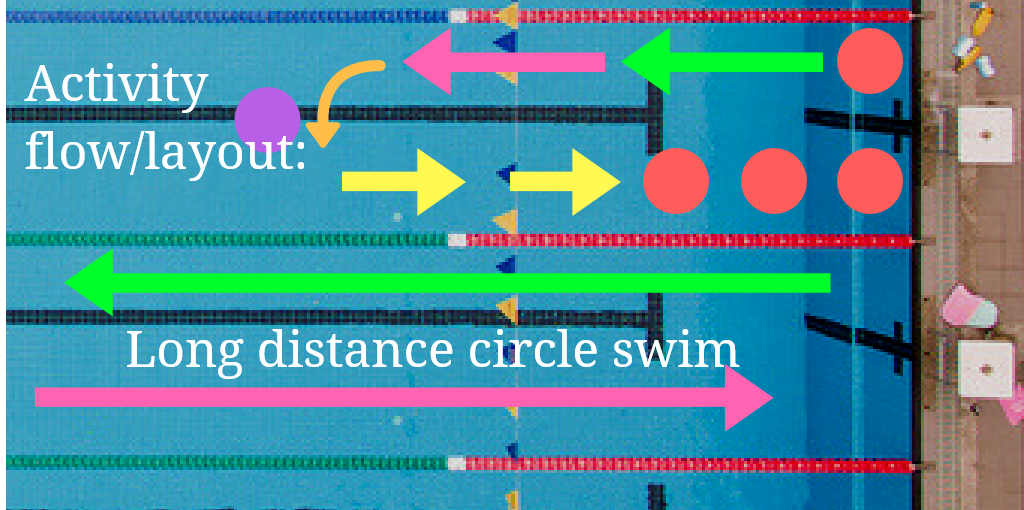
Circle swimming is the standard way swimmers share a lane during practice. Swimmers swim down the right side of the lane, cross over at the end, and return on the right side. The lane line should always be immediately next to their right side. This keeps everyone moving in the same direction and prevents collisions.
What Not to Do
- Scream at kids to "circle swim" without explaining what it is.
- Ignore it for 3 months and then expect people to do it automatically.
- Have a vision for lap swimming but don't say anything, just expect people to do it.
Some of these are a little tongue-in-cheek, but believe it or not, I've seen coaches do these things and then express frustration on why their swimmers aren't doing what they want.
Swimmers will only do the things that you teach, reinforce, and hold them accountable for.
Introduce Circle Swimming and Set Expectations
You have to tell swimmers that are new to the sport everything that they don't know. That means being explicit with all of your vision and where you want to go and all of the small organizational things you want to have happen.
New swimmers do not know what circle swimming is. They don't understand that swimmers should go down the right side of the lane and move across the lane at the end, then return on their right side. The lane line should always be immediately next to their right side.
"Swim Down the Lane on the Right Side, Then 'Set Up Your Lane'"
Tell swimmers to do a 25, or one length of the pool of freestyle. They should swim on the right side of the bottom line, and then set up the lane at the end.
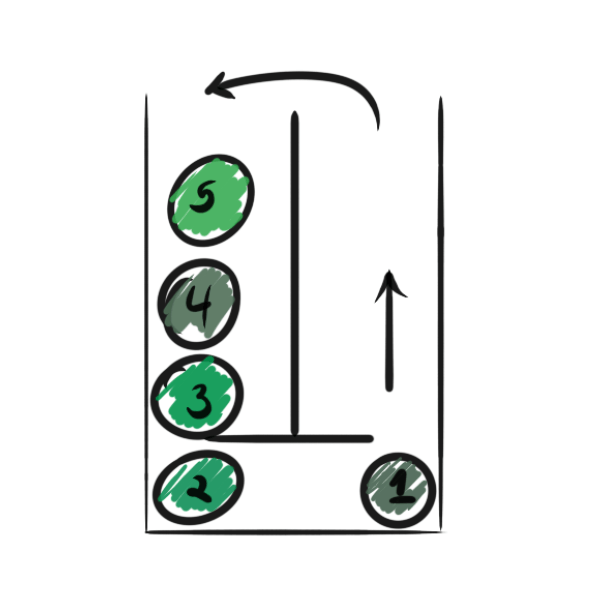
Set up your lane review.
First person goes in the right hand side of the lane. Everyone else lines up along the opposite side of the lane, near lane line. When the first person takes their turn, wait until they cross the center line, then second person takes their turn. Keep going until everyone has done their activity.
"Swim Down the Lane on the Right Side Now, or the Other Side from the One You Used to Get Here"
Swimmers have crossed the pool once, now we're going back on the other side of the lane. Tell swimmers explicitly which side of the lane to use by standing in front of it, showing them, and describing with your words where exactly they should be.
Enforce circle swimming
Coaches must remain vigilant during practices, constantly observing swimmers’ adherence to circle swimming protocols. It’s not enough to teach the skill once and expect perfect execution; reinforcement is key. Verbal cues, such as reminders and corrections, should be given frequently to guide swimmers’ positioning and movement within the lane. Non-verbal feedback, such as hand signals or positioning yourself strategically on the deck, can also be highly effective in maintaining order and flow during sets and group activities. By providing continuous feedback, coaches help swimmers internalize circle swimming as a standard practice rather than a sporadic expectation.
Effective circle swimming becomes second nature to swimmers only through consistent practice and reinforcement. Coaches play a pivotal role in this process, ensuring that each swimmer understands their role and responsibilities in maintaining lane discipline. Whether it’s through structured drills focused on circle swimming or integrating it seamlessly into every practice set, the goal is to make this skill a habitual part of every session. By doing so, coaches not only foster a more organized and safe training environment but also instill a fundamental aspect of swim culture that swimmers will carry with them throughout their swimming careers.
By focusing on these actions, coaches can establish and reinforce circle swimming as a natural and fundamental part of swim practice. Good luck with your session planning! 🏊♂️
Discussion0 comments