
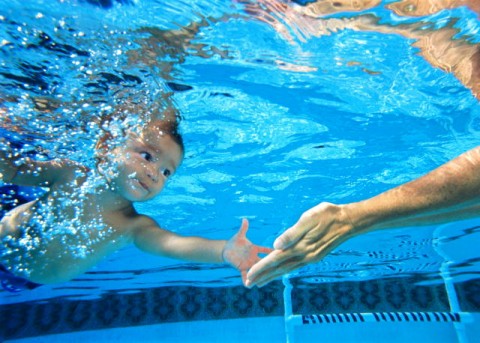
Swimming can be described as the ability for one to move harmoniously through the water. It is a very wonderful activity, especially for infants and children who are in the process of growing. Swimming is excellent for their growth, health, and overall fitness.
However, it is wise for every parent and swimming teacher to take caution while imparting swimming lessons to children. Learning to swim is a process, not a product. Therefore, a standard, well-designed swim lesson plan for infants should be put in place and adhered to by both the teacher and the parent.
Key Terminology for Infant Swimming
While most pediatricians do not approve of infant swimming, infants from as old as 6 months to 6 years can be taught swimming and become very proficient. To successfully implement this lesson plan, it is important that these key terms are understood:
Key Terminology for Infant Swimming
- Underwater Swim: This refers to swimming while the face is immersed in water.
- Parent/Teacher Hold: This technique is used when the parent's or teacher's hands are under the child's armpit while both are facing the same direction, and the child is positioned beside the holder.
With this foundational knowledge, a swim lesson plan for infants—and a valuable guide for novice teachers—can include a clear, progressive sample curriculum:
Pass 1: Face-Above-The-Water
Here, with the child held in a horizontal direction, they are gently glided on the surface of the water using parent hold from one point to another in a child pace. The face of the child should always be kept above the water at this stage. Only when the child has fully demonstrated comfortability with immersing their face in water should the next step be taken.
Pass 2: Brief Underwater
This step is similar to step #1, except that here, while the child is gently being glided across the surface of the water, their faces are immersed into the water for 2 seconds. Giving a start signal at any step is advised since this prepares the child to be ready. Care should be taken so that the child does not swallow water for health reasons.
Pass 3: Underwater Swim
As the child continues to show progress, the duration of facial immersion can be lengthened so that only 3 or 4 seconds is spent on the surface during a pass. Immersion should not involve dunking the whole body into the water; parts of the head and back should remain on the surface as the push is made gently and subtly.
Pass 4: Extended Underwater Swim
Essentially, for a basic swimming lesson, this step is taken as the top most. The length of immersing a child's face can be extended slightly by one or two seconds. However, the child should determine when and for how long the extended time should be. The key to success in an infant swim lesson plan is for the teacher to be in a position to learn the signals communicated by the child—such as eyes, expression of the face, or exhalation of air, among others. For instance, an exhalation means that inhalation will follow consequently. Therefore, the child should be brought on the surface to breathe.
Safety and Best Practices
In all these steps, the teacher should progressively be very close to the child for safety, even as new swimming techniques are being explored. Furthermore, the teacher must remain non-aggressive with the child and maintain a smiling face. Remember that teaching water safety is just as important as teaching strokes.
Discussion0 comments