
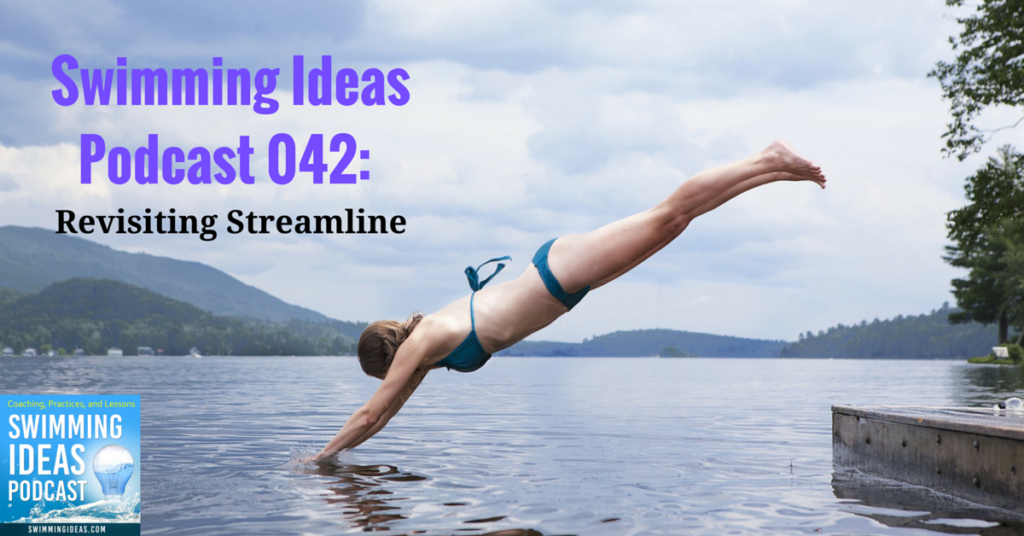
In this episode, we dive deep into the most fundamental, yet often overlooked, skill in swimming: the streamline. It is the base upon which all efficient strokes are built. If your streamlines aren't perfect, your entire swim will suffer.
The Three Core Principles of Streamlining
When teaching or reviewing streamline, we focus on three simple, actionable commands that address the majority of common errors. Mastering these three elements is key to maximizing efficiency and minimizing drag.
What are the 3 things to streamline?
- Lock thumb: Ensuring a tight, straight hand position.Look down: Keeping the head neutral and aligned with the spine.Squeeze ears: Maintaining a tight profile by keeping the head tucked close to the body.
Downloadable Skill Sheet
For a printable guide, download our sample streamline skill sheet:
What Problems Do These Commands Correct?
By consistently enforcing the three core principles (locking the thumb, looking down, and squeezing the ears), we address a wide range of common technical flaws that hinder speed and efficiency. These commands correct:
- Head lifted and looking forward (causes drag).Arms not tight against the head (creates gaps and resistance).Hands wavering (indicates lack of core tension).Body not straight (results in a high-drag, curved profile).Hands at 11 o'clock (a common error in pull phase).Arms bent and slow (lacks propulsion and power).The “fake” streamline (where the body is technically straight but lacks tension).Short streamlines (not traveling far enough underwater).The bad crawl position (a general term for poor body alignment).
Essentially, by addressing these points, we ensure the swimmer moves through the water as a single, efficient unit.
Why Is Streamline So Important?
Streamline is arguably the most efficient and best way to move through the water. It is the starting point—the base—for every single stroke. Every successful swim stroke begins with, or transitions back into, a streamlined position. It is the easiest horizontal motion we can achieve, making it the perfect foundation for building advanced skills.
Teaching Streamline Across Levels
For Beginners
With beginners, we are less strict with the three goals initially, allowing them to practice the concept on the surface. However, we still rigorously enforce looking down, encouraging squeezed ears, and locking the thumb. This establishes good habits early.
As Swimmers Progress
As swimmers advance through levels, the focus shifts. We initiate the streamline deeper underwater and require them to travel longer distances underwater while maintaining that perfect, tight profile. This transition from surface work to deep underwater efficiency is crucial for competitive swimming.
Conclusion: A Continuous Improvement Process
Streamline mastery is not a destination; it's a continuous process of refinement. We encourage coaches and instructors to constantly review these core principles with their athletes, making the streamline a habitual thought rather than just a physical action.
(Coach's Note: We welcome your input! Can you think of 3 simple commands that will address the majority of issues in streamline? Share your thoughts below!)
Discussion0 comments