
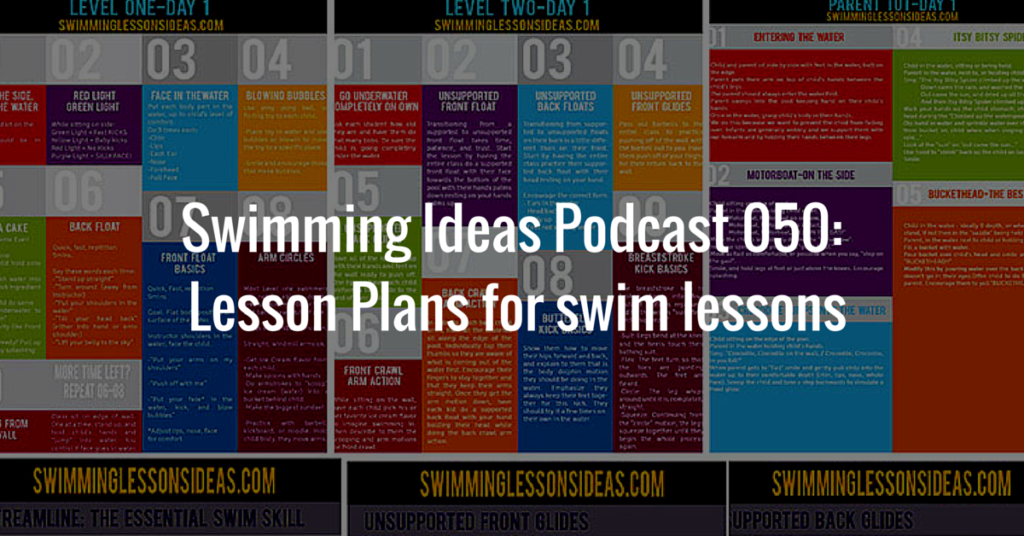
Lesson plans are a cornerstone of effective swim instruction. While veteran and highly experienced teachers may feel they can operate without them, proper planning remains absolutely necessary when managing student levels, setting move-up criteria, and ensuring overall progression.Simply put: You have to know where you want to go before you start moving forward.
The Need for Structure in Swim Instruction
It's a reality that the majority of swim instructors are inexperienced. Many park districts hire 15-22 people, often as employees' first job—a temporary or part-time role with little promise of long-term growth. This leaves a small population of truly professional instructors who possess deep pedagogical knowledge.
Resources like <a class="wpil_keyword_link" href="https://www.swimminglessonsideas.com/shop/" title="Lesson plans" data-wpil-keyword-link="linked">Lesson plans</a> provide the experience and structure of veteran professional instruction to novice teachers.
Swimming Ideas is an accumulation of 20 years of swim instruction experience and refinement. Our levels and testable skills point toward preparing swimmers for <a href="https://www.swimminglessonsideas.com/blog/advanced-lessons-lesson-swim-team-bridge/">swim teams</a>. The progression moves systematically: Underwater, body position, glides, arms, breathing, and finally outward to competitive strokes.
The Layers of Complexity in Lesson Planning
A successful lesson plan isn't just a checklist; it involves multiple layers of complexity:
- Overall Goal: The ultimate aim is for the student to swim well and confidently.Level Goals: Determining the correct order in which skills should be taught to build competence.Skill Progressions: Creating incremental steps designed to cross-promote skills, maximize effort, and optimize time spent in the water.Reinforcement: Utilizing scripts and repetition to reinforce essential basics. This means distilling down the essential fundamentals for each skill.Engagement: Incorporating games and fun activities to allow students to practice skills in a low-stress environment.
Avoiding the 'Narrow Vision' Trap
Novice instructors often lack the 'vision' for the entire life-cycle of the swimming participant. They tend to think in objective-based, narrow ways. For example, they might see a swimmer who can't do front crawl or go underwater and focus solely on that goal, ignoring other crucial skills, or worse, over-teaching and overwhelming young swimmers.
A key coaching principle here is to <strong>start broad and then narrow the focus</strong>. Trying to teach exact hand position and high elbow recovery to children who can't keep their body straight or who are still kicking and moving their arms simultaneously is often foolish and premature.
The ideal progression follows this logical flow:
Underwater (Broad foundational movement)Glides and body position (Focus on posture, line, and balance)Arm circles (More focused skill)Turning head to the side to breathe (Narrow focus)Arm recovery target; return to position 1 (Narrow focus)High elbow recovery (Extremely narrow, advanced skill)
Without a structured lesson plan, an instructor might know all these steps but perform them out of order or skip some entirely. Following a planned progression is much more efficient and successful in less time.
The Anatomy of a Structured Lesson
Lesson plans also generally follow a proven pedagogical model, similar to the planning wheel found here: <a href="https://teal.ed.gov/tealGuide/lessonplanning">https://teal.ed.gov/tealGuide/lessonplanning</a>.
Following this model, a typical lesson structure looks like this:
Warm-up: Start by going underwater to activate the body and focus on core skills.Introduction: Introduce the main objective: "Today, we're going to practice front glides."Demonstration: The instructor demonstrates the skill clearly and correctly.Practice & Repetition: Students practice with repetition (e.g., 3 x streamline + kick). The coach must push each individual to the next step of progression based on their personal ability, ensuring immediate feedback.Integration/Game: Play a game or perform another skill that incorporates the newly learned skill. This solidifies the concept in a fun, low-stakes way.
Lesson plans provide vital guidance. They standardize language, allow for opportunities for games and deviation, and prevent the lesson from following a rigid, unsustainable path. They are designed for <strong>Skill, Skill, Game</strong>, where each skill builds logically on the last and progresses in difficulty.
Driving Towards End Objectives
Remember that the end objectives are the Level goals or testing criteria. Every single step in the lesson plan must drive towards that ultimate goal, giving multiple opportunities for the student to practice, or even test, those skills when ready.
Discussion0 comments