
Where you stand in a swimming lesson is almost as important as the feedback you give. Almost.
Have you ever thought to yourself, "How could I make this swim lesson just a little bit better?" Maybe, or maybe not. I spend most of my days thinking about how to improve swimming lessons. When I watch swim lessons, I assess the quality of the instructor's feedback, think about how the kids could be better engaged, and identify things that work and things that don't.
I was a little shocked to see that most novice swim instructors (high school, less than 1 year, or seasonal) don't have any intentionality or purpose with where they stand in a lesson — unless it's to avoid an obstacle or help a swimmer.
The Teaching Swimming Workbook 4th Edition is your GUIDE to better lessons. The following info is from this book.
Get the PRINT book from Amazon now!https://amzn.to/4j84sch
One of the best lessons in the Teaching Swimming workbook is guidance on where the swimming instructor can stand and position themselves for more effective feedback.
Where to Stand
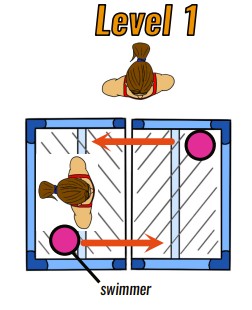
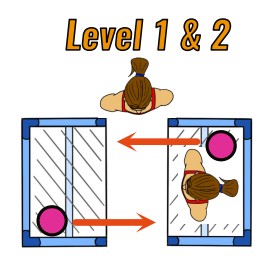
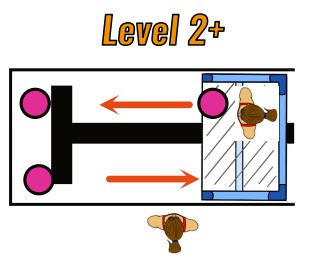
If you're using swim platforms and benches — which you should because they're awesome — then use the pictures above to position yourself for the best feedback.
Level 1
With two benches pushed together, get in there and be a part of the class. Sit on the benches and join in the activities. Alternately, you can stand outside the caged-in benches and provide direction and feedback from outside. Stand in the middle to provide maximum support where there is a gap and kids can potentially fall or slip.
Level 1 & 2
Push those benches further apart and start encouraging independent movement and motion. We want swimmers to gradually start crossing the benches and taking those brave glides on their own. Stand or sit on a bench to "receive" or catch a swimmer's attempt. If they're in Level 1 and stepping or reaching across the gap, then stand just outside the benches and support swimmers directly.
Level 2+
Again, position yourself where a swimmer will NEED physical assistance — at the apex of their distance and attempts. A swimmer will do a streamline, take some arm strokes, then need to breathe. When they take a breath, they'll go vertical and need help standing. Stand there and pick them up.
If you have advanced swimmers, stand outside the rotation method or lane and give feedback on every attempt when the swimmer reaches the bench or stands.
Being a Traffic Cop vs. an Instructor
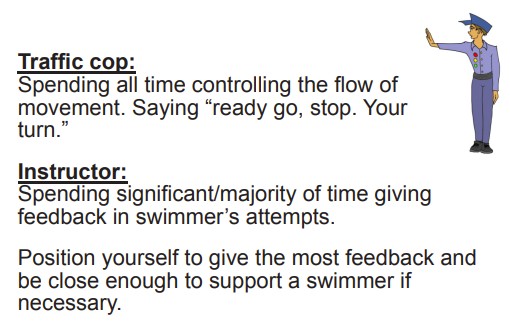
The traffic cop spends the majority of their time directing the flow of traffic. They'll say things like, "Ready go" or "John, your turn. Go!"
Spend as LITTLE time as possible being a traffic cop. Align your program's language and format using the "rotation method" —October 2024: Rotation Method
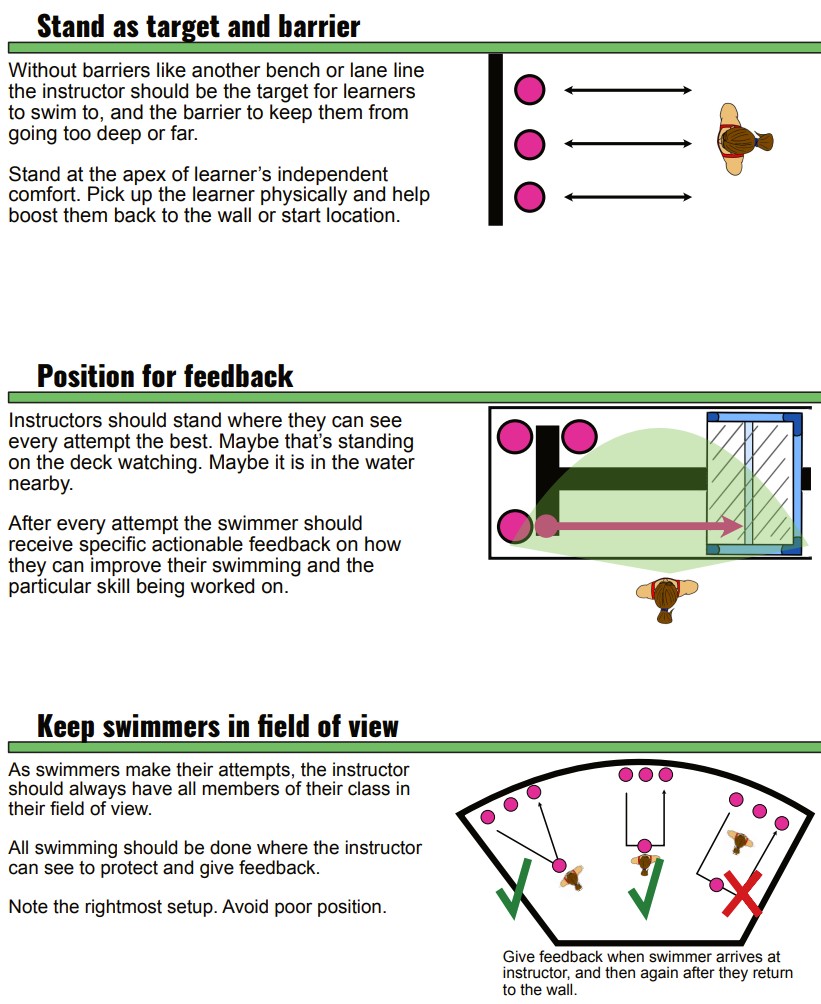
Once you've standardized the expectations of how your lessons will run, you can then position yourself well to do what you're there for: giving feedback that gets results.
Position for Maximum FEEDBACK
Get the PRINT book from Amazon now!https://amzn.to/4j84sch
Discussion0 comments