
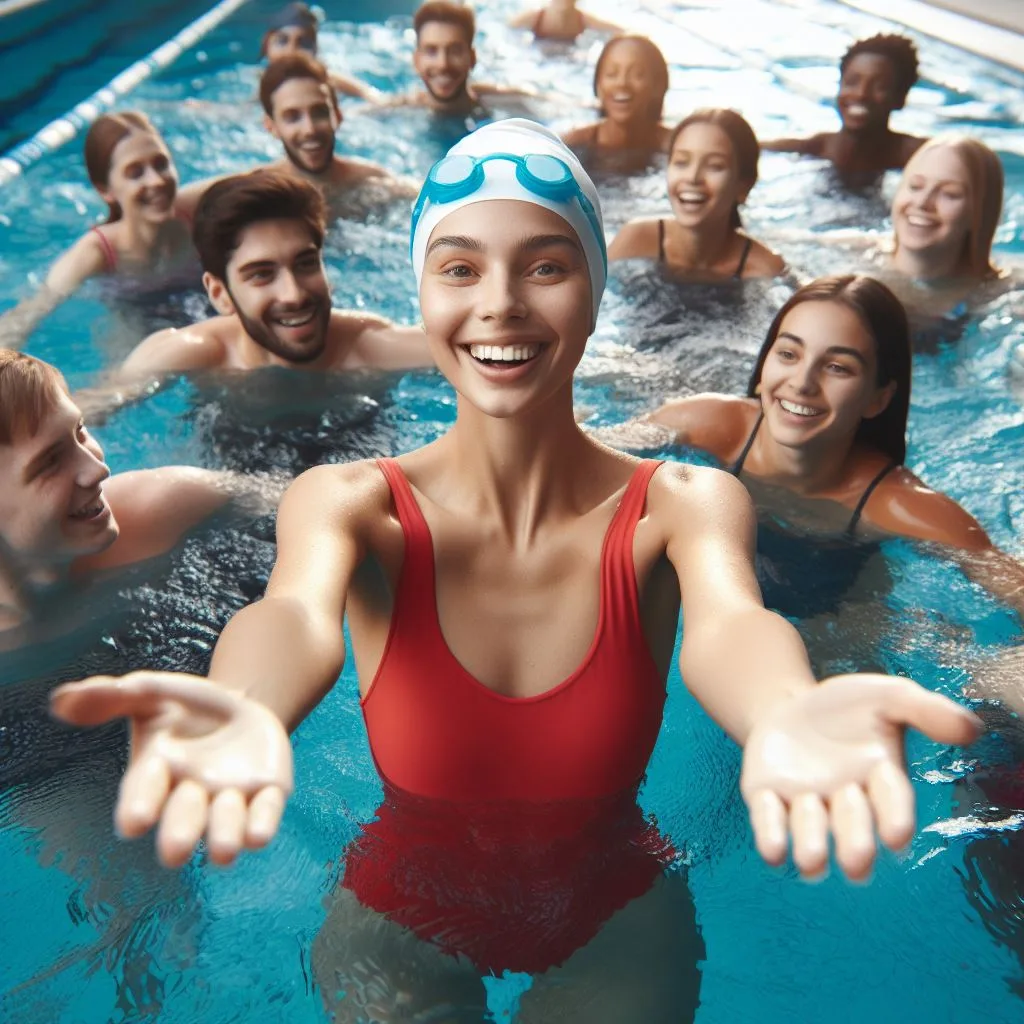
Running a swimming lesson program for a park district or agency can be both rewarding and challenging. You have to manage a team of instructors, lifeguards, and other staff members while ensuring the safety and satisfaction of your participants. How can you make sure your program runs smoothly and effectively? In this post, we'll share tips and strategies based on collaborative leadership and staff morale, using resources from Swimming Ideas.
What is Collaborative Leadership?
Collaborative leadership is a style that fosters teamwork, trust, and empowerment among coworkers. It's especially useful for managing a swim program, where you coordinate with instructors, lifeguards, and participants. Collaborative leaders share information, seek input, delegate tasks, and motivate their team to contribute to their maximum potential. They also respect diverse perspectives, maintain a strategic focus, and navigate organizational dynamics patiently.
This approach differs from traditional leadership, where the leader acts as an isolated director giving orders. Collaborative leadership is more about facilitating than dictating, listening than telling, and empowering than controlling.
How to Apply Collaborative Leadership to Your Swim Program
Why is Staff Morale Important?
Staff morale is the overall outlook employees have toward your organization. Good morale means high satisfaction—people are engaged, motivated, and happy at work. Low morale leads to decreased productivity, absenteeism, and high turnover—a big problem for any program.
Morale affects not only staff performance and well-being but also the quality and safety of your services and participant satisfaction. A happy, motivated staff delivers high-quality instruction, creates a positive environment, and exceeds customer expectations.
How to Boost Staff Morale in Your Swim Program
How to Provide Clear Expectations for Your Staff
Clear expectations help staff understand what's expected, how they'll be evaluated, and how to achieve goals. They also help you monitor and improve performance.
Running a swimming lesson program can be rewarding and challenging. By applying collaborative leadership, boosting staff morale, and providing clear expectations, you can ensure your program runs smoothly and effectively. Use the resources from Swimming Ideas to help plan, implement, and evaluate your program. If you have questions or suggestions, feel free to contact us. Happy swimming!
Gamification and Feedback: Making Lessons Fun and Engaging
One of the challenges of running a swimming lesson program is to keep your participants engaged and motivated throughout the sessions. How can you make your lessons more fun and enjoyable for your participants? In this section, we will share some tips and strategies based on the principles of gamification and feedback, using the resources and guidance from https://www.swimminglessonsideas.com.
Gamification is the use of game elements and design to enhance the appeal and effectiveness of non-game activities. It is especially useful for enhancing the learning and retention of new skills, such as swimming. Gamification can make your lessons more fun, interactive, and rewarding for your participants. Gamification can also increase the motivation, engagement, and loyalty of your participants.
Gamification is different from simply playing games, where the main goal is to have fun or win. Gamification is more about applying the principles and mechanics of games, such as goals, challenges, rewards, feedback, and competition, to the learning process and outcomes.
Using Games and Activities from All Access Membership
Use the games and activities from our All Access Membership lesson plans. These games and activities are designed to reinforce the skills and concepts taught in the lesson plans. They also provide variety, challenge, and excitement to your lessons. You can choose from different categories, such as warm-up, skill development, skill application, or cool-down. You can also customize the games and activities to suit your participants' needs, preferences, and abilities.
Implementing a Reward System
Implement a reward system for your participants. Reward your participants for their attendance, participation, effort, improvement, or achievement. You can use different types of rewards, such as points, badges, certificates, stickers, or prizes. You can also use different methods of rewarding, such as individual, group, or team rewards. You can also use different criteria of rewarding, such as performance, progress, or behavior.
Creating a Leaderboard
Create a leaderboard for your participants. Display the scores, rankings, or achievements of your participants on a visible and accessible platform, such as a website, a social media page, or a bulletin board. This will create a sense of competition, recognition, and pride among your participants. It will also motivate them to improve their skills and surpass their peers.
The Role of Feedback in Learning
Feedback is the information and guidance that you provide to your participants to help them learn and improve. Feedback is essential for the learning and development of your participants, as it helps them understand their strengths, weaknesses, areas of improvement, and goals. Feedback also helps you monitor, measure, and evaluate the performance and quality of your participants.
Providing Frequent and Timely Feedback
Provide frequent and timely feedback to your participants. Give your participants feedback after each lesson, activity, or task. Provide them with specific and constructive feedback, highlighting what they did well, what they need to work on, and how they can improve. Use positive and encouraging language, such as "great job", "well done", or "keep it up". Avoid negative or harsh language, such as "that was bad", "you failed", or "you are hopeless".
Using Different Modes and Methods of Feedback
Use different modes and methods of feedback. Use verbal, written, or visual feedback, depending on the situation and the preference of your participants. Use direct, indirect, or peer feedback, depending on the purpose and the impact of your feedback. Use formative, summative, or ipsative feedback, depending on the stage and the goal of your feedback.
Conclusion
Running a swimming lesson program for a park district or agency can be a rewarding and challenging task. By applying the principles of gamification and feedback, and by using the resources and guidance from https://www.swimminglessonsideas.com, you can make your lessons more fun and enjoyable for your participants. You can also enhance their learning and retention of the swimming skills and concepts.
We hope you found this section helpful and informative. If you have any questions, comments, or suggestions, please feel free to contact us. We would love to hear from you. Happy swimming!
Discussion0 comments