
Audio Player:
The content of the podcast episode is available here:
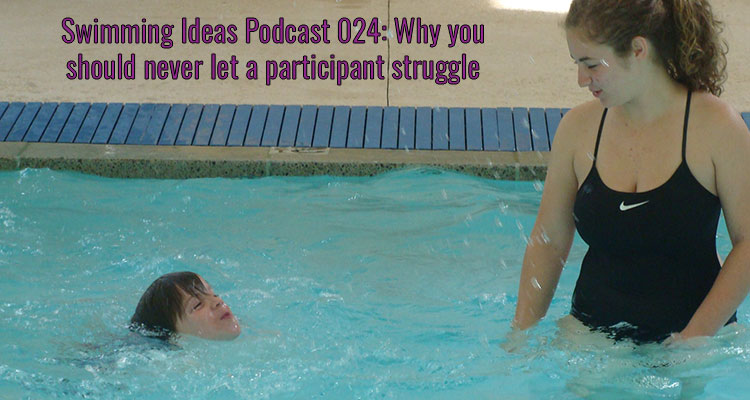
Why We Never Let Participants Struggle to Swim
As coaches, it is vital to understand the emotional impact of our teaching methods. The goal isn't just technical proficiency; it's building a positive, lasting relationship with water and swimming.
The Risks of Making Students Struggle
When we allow participants to struggle—physically or emotionally—the consequences can be profound and long-lasting:
- Erodes trust: Trust is the foundation of learning. If students feel abandoned or overwhelmed, they lose faith in both the process and the instructor.
- Not helpful teaching technique: Struggle often masks a lack of foundational skill or confidence, making it an ineffective way to gauge progress.
- Creates fear and distrust: Negative emotional associations with water are far harder to overcome than physical skills.
Remember that what hurts you doesn't make you stronger; it just pulls away from your positive bank. What Doesn't Kill You Makes You Weaker
The Power of Positive Support
Encouragement and consistent support produce healthy, long-term swimmers. Our primary role is to be kind and supportive teachers. Ultimately, fear is worse than respect and love.
While we can achieve short-term results by being harsh instructors, this is not effective teaching. It creates negative emotional associations with swimming and water itself. We must prioritize the student's psychological safety above immediate performance metrics.
Best Practices for Coaching Support
The best option is <strong>challenging support</strong>. This means setting goals that push them slightly outside their comfort zone, but always within a safe, supported bubble. Here are key guidelines:
- Give clear commands: Use precise, actionable language so the student knows exactly what is expected of them.
- Be present and supportive: Always be ready to lift or provide safety support when needed.
- Never walk away or let a swimmer struggle alone: Your physical presence and emotional availability are critical for building confidence.
By adopting this philosophy, we ensure that our students view swimming not as a source of anxiety, but as a place of growth, respect, and joy.
Discussion0 comments