
[vc_row][vc_column width=”1/2″][vc_single_image image=”205″ img_size=”large” onclick=”img_link_large” img_link_target=”_blank”][/vc_column][vc_column width=”1/2″][vc_single_image image=”185″ img_size=”large” onclick=”img_link_large” img_link_target=”_blank”][/vc_column][/vc_row][vc_row][vc_column][vc_column_text]
h1>Beginner Swim Lesson Template/h1>
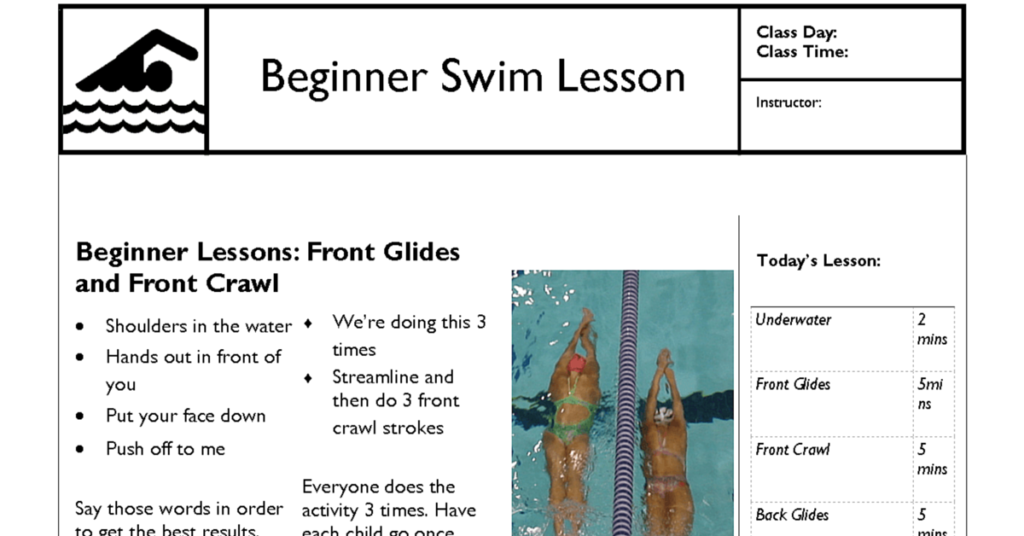
Use this basic template to get a general idea on what to do. Most swim lessons are focusing on Front crawl (Freestyle), or Back Crawl (Backstroke). While these two skills are primarily done on the surface, a third skill generally termed “Going Underwater” was added.
_ Freestyle Activities:
- Floats
- Arm Circles
- Breathing Practice
- Bobs
- Streamlines
- Short Distance swimming practice (front glide with support and do 3 front crawl strokes)
- Kicking flutter kicks with support (Barbell, Kickboard, or other support)
_ Backstroke Activities
- Floats
- Glides
- Arm Circles
- Body Posture (Soldier position)
- Balance on surface
- Kicking flutter kicks with support from teacher or fromtoys
- Short distance swimming with instructor support,hold the head, prompt belly up.
_ Going Underwater
- Diving fortoys, rings, sticks, torpedo sharks
- Constant encouragement during every activity
- “Can you put your face in the water?
- “How about your lips?”
- “What about your nose?”
- Jumps from the side
- “Do you want to go underwater?”
- stick to their choice, but ask to go under
_
We offer comprehensive Swim Lesson Plans for every level
Check out the freelesson plansoffered by signing up for the mailing list.If you’re looking for a complete guide for your classes or your staff check out the Premium Swim Lesson Plansfound here.
[/vc_column_text][/vc_column][/vc_row]
Discussion0 comments